William Tang
McGill MSc Epidemiology
Waterloo BSc Health Science
PMP Certified Project Manager
CBAP Candidate
Personal Details
- Phone: 1-548-328-4611
- EMAIL: william.tang1013@mail.mcgill.ca
- Birthday: October 13
- Food: Dim Sum
- Sport: Badminton
- Beverage: Black Coffee
Public Health Journey
I work at the intersection of healthcare research, evaluation, and project delivery. Over the past several years, I have contributed to initiatives across Alberta, Ontario, and Quebec, supporting efforts to improve patient care and system performance.
The Foundation (BSc & Co-op): I began my training at the University of Waterloo, where I completed a BSc in Health Science. Through two years of full-time co-op experience, I worked across a range of healthcare and research settings. These experiences gave me early exposure to how healthcare systems operate in practice and where gaps often emerge between planning and execution.
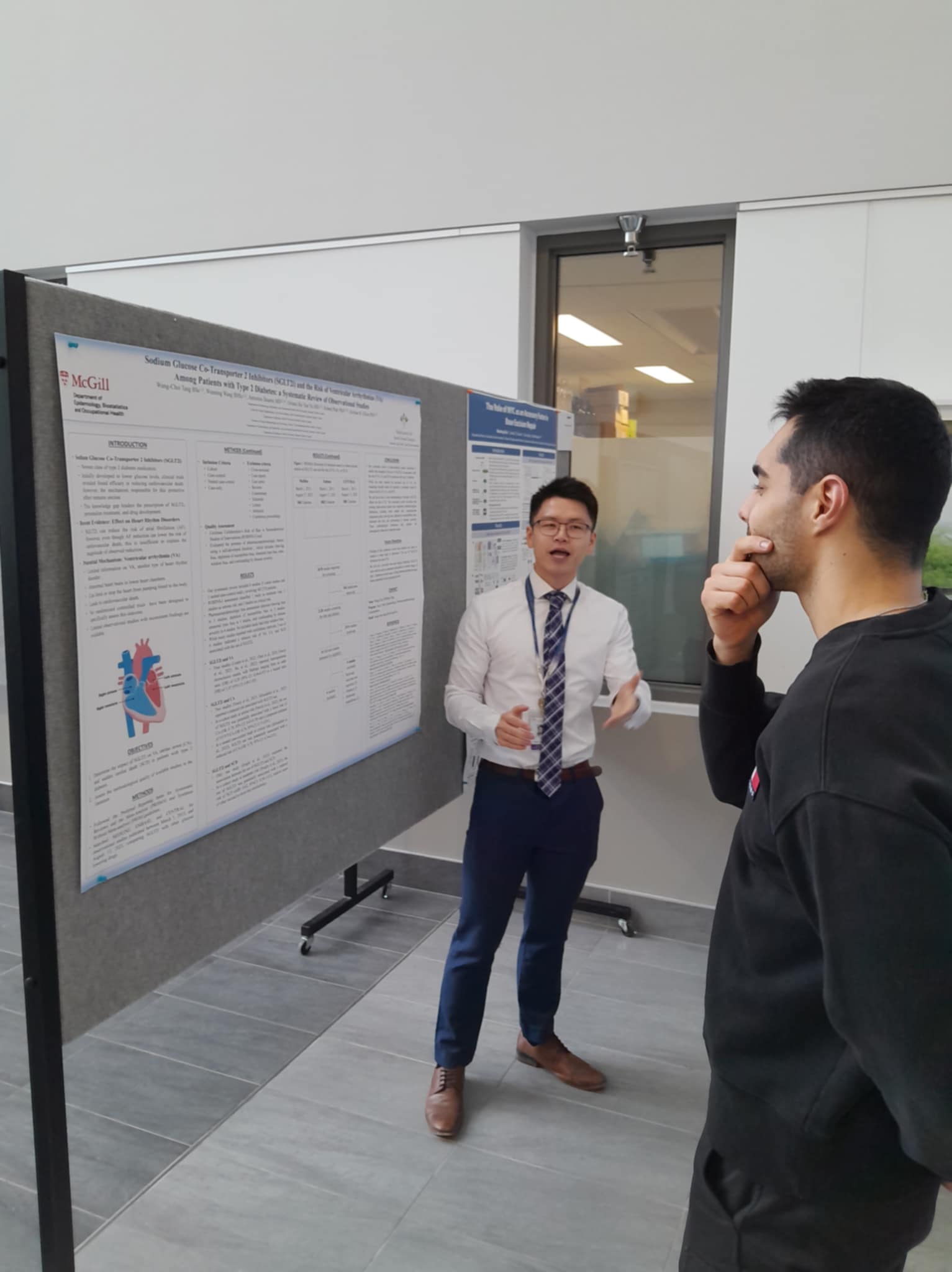
The Scientist (MSc): My early exposure to research inspired me to pursue a Master’s in Epidemiology at McGill University. There, I received rigorous training in research design and casual inference. My thesis evaluated the post-market cardiovascular safety of diabetes medications using real-world data.
The Project Manager (PMP): As I became more involved in complex initiatives, I saw that many great projects struggled during implementation. This led me to pursue the Project Management Professional (PMP) certification, where I developed structured approaches to planning, coordination, and delivery to ensure that projects move from concept to completion.
The Business Analyst (CBAP Candidate): I am currently pursuing the CBAP certification to further strengthen my ability to define problems clearly and design practical solutions. This builds on my existing experience by focusing on requirements elicitation, process clarity, and ensuring that initiatives deliver meaningful value to stakeholders.
Let’s Connect: I love meeting new people. Feel free to send me an email. I am always happy to connect.
Expertise
Real-World Evidence (RWE) Generation
Use of administrative and clinical data to generate insights that inform clinical practice and health policy.
Research Operations & Performance Monitoring
Development of tracking systems and KPIs to monitor project progress, timelines, and resource use.
Study Design & Feasibility
Design of clinical and observational studies with attention to operational feasibility, timelines, and potential bottlenecks.
Statistical Analysis & Data Interpretation
Analysis of health data (R, SAS, Excel) and translation of findings into clear, actionable insights for non-technical audiences.
Pharmacoepidemiology & Safety Surveillance
Evaluation of medication safety and effectiveness using real-world data, with attention to bias and confounding.
Process Improvement & SOP Development
Development of workflows and SOPs to improve consistency, efficiency, and team coordination.
Systematic Reviews & Evidence Synthesis
Conducting literature reviews to identify knowledge gaps and support research and program development.
Regulatory Compliance & Ethics
Preparation of REB submissions and ensuring adherence to ethical and regulatory standards.
Stakeholder Engagement & Knowledge Translation
Development of reports, presentations, and summaries to support decision-making across clinical and research teams.
Education
International Institute of Business Analysis
Certified Business Analysis Professional
Certification Status: In Progress
Project Management Institute
Project Management Professional Certification
Certification Status: Active
McGill University
Master of Science in Epidemiology
Pharmacoepidemiology Specialization
University of Waterloo
Bachelor of Science in Health Science
Health Research Specialization
TRAINING
- HLTH 173: Indigenous Health
- HLTH 230: Introduction to Health Informatics
- HLTH 260: Social Determinants of Health
- HLTH 280: Applied Public Health Ethics
- HLTH 290: Introduction to Health Neuroscience
- HLTH 340: Environmental Toxicology & Public Health
- HLTH 341: Principles of Pathobiology
- HLTH 350: Principles of Occupational Health
- HLTH 370: Ecological Determinants of Health
- HLTH 448: Advanced Social Determinants of Health
- PPHS 602: Foundation of Population Health
- HLTH 333: Principles of Epidemiology
- HLTH 442: Epidemiology of Non-Communicable Diseases
- HLTH 443: Epidemiology of Communicable Diseases
- EPIB 601: Fundamental of Epidemiology
- EPIB 603: Intermediate Epidemiology
- EPIB 605: Critical Appraisal in Epidemiology
- EPIB 631: Intermediate Pharmacoepidemiology
- EPIB 661: Advanced Pharmacoepidemiology
- EPIB 654: Pharmacoeconomics
- HLTH 204: Quantitative Approaches to Health Science
- STAT 316: Introduction to SAS
- HLTH 344: Qualitative Methods for Health Research
- EPIB 607: Inferential Statistics
- EPIB 613: Introduction to R
- EPIB 621: Data Analysis in Health Science
- EPIB 645: Confounding Control in Epidemiology
- Undergraduate Thesis: Latent Classification of Patients with Schizophrenia
- Data Source: interRAI & OMHRS (Ontario Data Set)
- Master’s Thesis: Sodium Glucose Co-Transporter 2 Inhibitor and the Risk of Ventricular Arrhythmia
- Data Source: CPRD Aurum (United Kingdom Data Set)
- Impact Evaluation of a Rural Mental Health Outreach Program
- Data Source: Interviews with 15 Rural Seniors in Ontario
- Feasibility of Digital Reporting to Replace Paper-Based Workflows for Health Care Aides in Alberta
- Data Source: Survey of 100 Health Care Aides and Caregivers in Calgary, Alberta
- Feasibility of Office-Based Ureteroscopy with Thulium Fiber Laser Lithotripsy Under Local Anesthesia
- Data Source: 100 Patients with Kidney Stones in Edmonton, Alberta
Gallery